Making Money Personal
Engaging in real talk about financial matters that affect your life and your community.
Listen on:






Episodes

2 days ago
2 days ago
Identity theft criminals highly target some of the most vulnerable individuals in our communities. With a growing increase in identity fraud and other scams today, it’s critical that we do our parts to protect those in our lives most at risk of identity scams and especially elder abuse.
Links:
Learn more and get helpful resources from the Consumer Financial Protection Bureau (CFPB)
To learn more about how to recognize, help prevent, and respond to elder mistreatment, visit the National Center on Elder Abuse
Learn more about the identity protection benefits with a Better Checking account
Check out TCU University for financial education tips and resources!
Follow us on Facebook, Instagram and Twitter!
Learn more about Triangle Credit Union
Transcript:
Welcome to Money Tip Tuesday from the Making Money Personal podcast.
At Triangle, protecting the financial well-being of you and your loved ones is a top priority. June is Elder Abuse Awareness Month, a time to raise awareness of the financial exploitation and other forms of abuse that disproportionately affect older adults. Elder abuse can take many forms. It could be physical, emotional, or financial, and it could be due to neglect or due to exploitation. Often, elder abuse goes unreported due to fear, shame, or isolation.
Did you know? Financial exploitation is the most common form of elder abuse—and it often goes unnoticed until significant damage is done. Scams, fraud, and even manipulation by trusted individuals can leave lifelong financial and emotional impacts.
How you can help:
Learn the warning signs of financial abuse Financial abuse doesn’t always look obvious—and that’s what makes it so dangerous. It can start subtly: a sudden spike in withdrawals or transfers, unfamiliar charges, or changes in spending patterns that just don’t seem to add up. You might notice unpaid bills piling up—even though your loved one has more than enough money to cover them. Other warning signs include new names appearing on accounts, unexpected changes to wills or power of attorney, or unfamiliar individuals accompanying your loved one to financial appointments and speaking on their behalf.
Trust your instincts—if something feels off, it’s worth taking a closer look. Staying informed about these red flags is one of the most powerful ways to step in early and help protect someone you care about.
Learn more about common ways older adults may be at risk and get access to helpful resources from the Consumer Financial Protection Bureau (CFPB) at consumerfinance.gov or use the link in the show notes.
Check in regularly with older family members Consistent, meaningful connection is one of the strongest defenses against financial exploitation. Social isolation can make older adults more vulnerable—not just to scams, but to manipulation by people they trust. That’s why regular check-ins matter so much.
These don’t have to be formal conversations about money. A simple phone call, a coffee visit, or asking how things are going can open the door for your loved one to share concerns. Over time, these check-ins build trust and create a safe environment where they feel comfortable speaking up if something doesn’t seem right. It’s not just about vigilance—it’s about showing care, maintaining dignity, and helping them feel supported every step of the way.
Report suspicious financial activity If you notice something unusual—whether it’s account activity that doesn’t make sense or changes in behavior that raise concern—don’t wait. Acting quickly can prevent further loss and protect your loved one from deeper harm.
Start by contacting your financial institution to flag the activity—they can often help monitor accounts, stop transactions, or add safeguards. You can also reach out to your local Adult Protective Services, who are trained to investigate and intervene in cases of suspected abuse.
Speaking up might feel uncomfortable, but it can make a critical difference. Reporting concerns is not about causing trouble—it’s about protecting someone’s well-being and ensuring they have the support they need.
Together, we can help protect the financial independence and dignity of older adults in our community. To learn more about how to recognize, help prevent, and respond to elder mistreatment, visit the National Center on Elder Abuse at elderjustice.usc.edu or check the link in the show notes.
Need help or have concerns?
Our staff is trained to recognize signs of financial abuse. Call us at (800) 276-2470 or visit your nearest branch for confidential support. If you suspect an older adult in your life has fallen victim to a scam or identity theft, contact us. If you’re a member with a Better Checking account, you have access to identity theft recovery services for up to three generations of your family, including your parents if they live with you. Check out our website, trianglecu.org for more information about the amazing benefits you and eligible family members can get with a Better Checking account.
If there are any other tips or topics you'd like us to cover, let us know at tcupodcast@trianglecu.org. Also, remember to like and follow our Making Money Personal Facebook and Instagram to share your thoughts. Finally, remember to look for our sponsor, Triangle Credit Union, on Facebook and LinkedIn.
Thanks for listening to today's Money Tip Tuesday. Check out our other tips and episodes on the Making Money Personal podcast.

Tuesday May 26, 2026
Tuesday May 26, 2026
With fuel prices constantly rising, many people are looking for ways to save money on gas. Fortunately, there are practical ways to cut down on gas costs without buying a new car or drastically changing your lifestyle. Let’s break down some smart, realistic strategies that actually work.
Links:
Check out TCU University for financial education tips and resources!
Follow us on Facebook, Instagram and Twitter!
Learn more about Triangle Credit Union
Transcript:
Welcome to Money Tip Tuesday from the Making Money Personal podcast.
Let’s start with driving habits, because this is where many people lose money without realizing it. Things like speeding, rapid acceleration, and hard braking can lower your gas mileage by as much as 10 to 40%, especially in stop-and-go traffic. Driving smoothly and staying close to the speed limit can make a noticeable difference. It’s estimated that every 5 mph over 50 mph is like paying an extra 28 cents per gallon.
Next, don’t skip basic vehicle maintenance. This one isn’t flashy, but it matters. Keeping your car in good shape helps it run more efficiently and burn less fuel. For example, underinflated tires increase rolling resistance and force your engine to work harder. Proper tire pressure alone can improve gas mileage by up to 3%. Using the manufacturer-recommended motor oil and replacing dirty air filters can also improve fuel efficiency by 1–10%, depending on the vehicle. Small fixes really do add up.
Another way to save on gas is to plan out trips and combine errands. Fuel waste often happens before you even start the car. Making multiple short trips—especially with a cold engine—uses more gas than one longer, combined trip. Try planning routes ahead of time and combining errands whenever possible. Using navigation apps to avoid traffic and construction can also save fuel by reducing idle time and stop-and-go driving. Less time on the road means less money spent at the pump.
One of the easiest ways to save money on gas is simply not overpaying for it. Apps like GasBuddy, Waze, and Upside let drivers compare real-time gas prices in their area. GasBuddy alone reports helping users save billions collectively by showing the cheapest stations nearby and offering per-gallon discounts through its Pay with GasBuddy program. Many drivers save anywhere from 10 to 30 cents per gallon, which adds up quickly over a year.
Here’s one people overlook: extra weight and drag cost you money. Carrying unnecessary items in your trunk or using a roof rack when you don’t need it makes your engine work harder. It’s estimated that fuel economy drops about 1% for every 100 pounds of extra weight. Removing roof racks when not in use can also improve highway mileage by reducing aerodynamic drag.
Saving money on gas doesn’t require extreme changes—it’s about stacking small, smart habits. Drive smoothly, keep your car maintained, plan your trips, and take advantage of fuel-saving apps and tools. Over time, those few cents per gallon can turn into hundreds of dollars back in your pocket every year. And that’s money better spent on literally anything else than your gas tank.
If there are any other tips or topics you'd like us to cover, let us know at tcupodcast@trianglecu.org. Also, remember to like and follow our Making Money Personal Facebook and Instagram to share your thoughts. Finally, remember to look for our sponsor, Triangle Credit Union, on Facebook and LinkedIn.
Thanks for listening to today's Money Tip Tuesday. Check out our other tips and episodes on the Making Money Personal podcast.

Thursday May 21, 2026
Thursday May 21, 2026
In this episode we chat with Doug Mitchell and Jeff Carpentier from Nashua Community College (NCC) to discuss their aviation and air traffic control program. Doug and Jeff highlight the program's popularity and the need for air traffic controllers due to a current 4,000-controller shortage.
Learn more about NCC's air traffic control program: https://nashuacc.edu/program/air-traffic-control-2/
Explore more programs and resources at NCC: https://nashuacc.edu/
Learn more about Triangle Credit Union: https://www.trianglecu.org/
Check out TCU University for financial education tips and resources: https://triangleuniversity.org/
Learn more about Triangle Credit Union: https://www.trianglecu.org/
AD: Adventure Awaits! Learn more about our competitive auto rates: https://www.trianglecu.org/borrow/auto/

Tuesday May 19, 2026
Tuesday May 19, 2026
As people gear up for travel, home projects, tax deadlines, and outdoor events, scammers ramp up their efforts to exploit the seasonal rush. From too-good-to-be-true deals to impersonation schemes that feel alarmingly convincing, these tactics evolve every year and catch even savvy consumers off guard.
Links:
Learn more about the Identity Theft protection tools with a Better Checking account
Check out TCU University for financial education tips and resources!
Follow us on Facebook, Instagram and Twitter!
Learn more about Triangle Credit Union
Transcript:
Welcome to Money Tip Tuesday from the Making Money Personal podcast.
In this tip, I’m going to highlight the top five scams to watch for this spring, how they typically unfold, and the warning signs that help you protect your accounts, your identity, and your financial peace of mind.
Unclaimed Funds
Have you received an unexpected phone call with the unexpected news that you’re entitled to hundreds or thousands of dollars in unclaimed property? More likely than not, this is a phishing scam. The scammers are counting on you to take the bait and provide your personal information or payment details under pressure. Remember, legitimate government agencies won’t call or text asking for personal information to release your unclaimed property. Instead, you can visit https://unclaimed.org/search to see if any unclaimed funds can be returned to you.
Mortgage or Debt Relief Offers
Just like unclaimed funds and unclaimed property scams, fraudulent mortgage and debt relief offers are on the rise. If the offer is unexpected and requires payment upfront, it is more than likely a scam. Other signs of a scam can include urgency related to the timing of the transaction: if you don’t act immediately, you can’t take advantage of this offer later. Scammers often ask for payment right away, but it’s illegal for debt or mortgage relief companies to charge a fee before you receive their services. Remember, if you are having trouble paying your mortgage or other debts, reach out to the companies that you owe money, and explain your unique situation. Often you can work with lenders and creditors to develop a payment plan. You can find legitimate help from housing and credit counselors as well.
Unpaid Traffic Violations
Did you receive a text, phone call, or letter advising that you have unpaid traffic tickets or tolls? Many times, these messages are threatening and rely on you to act quickly under pressure to remediate the issue. To make matters worse, scammers are taking advantage of artificial intelligence to make false notifications appear to look legitimate. For example, letters can include a fraudulent copy of an agency’s seal or can mimic a court-ordered collections notice. Some letters even include a QR code to collect payment. If you receive one of these communications, reach out directly to the agency in question using a publicly available phone number to confirm the authenticity of the message you received.
False Safety Recall
Another scam making the rounds this spring is product recall notices. Scammers are sending fake texts impersonating popular retailers and advising of “urgent” product recalls. Many times, these text messages include a link to a website that looks a lot like the actual retailer’s website, but it’s designed for you to enter your personal information, sending it directly to the scammer. Generally, retailers will post safety notices directly on their platforms and will not send unsolicited text messages related to recalls or refunds. If you have registered a product with the manufacturer when you purchased it, actual recall notices will be delivered to you by mail or the email you used during product registration. Learn more about active product recalls at recalls.gov and cpsc.gov.
Weather Relief Scams
This time of year often brings severe weather to many parts of the country. In turn, this means that scammers are ready to target victims eager to complete storm-related repairs quickly. Stay skeptical of contractors who reach out to you directly, as it’s common for unlicensed contractors to target recovery zones – always ask for copies of their license, insurance, and a contract in writing before taking action. Make sure to use trusted resources to see what others are saying about contractors or funding resources. Seeking multiple estimates or quotes for services can be critical to help ensure you’re getting a fair deal and that you are comparing equivalent work, materials, and timelines for repairs. Finally, pay by check or with credit card; other payment methods such as cash, cryptocurrency, wire transfer, gift cards, or a payment app can make it challenging to recover your money if it’s a scam.
Scams can be unsettling, but with vigilance and the tips above, you can help protect yourself and your data. Always remember that when in doubt, take a step back and verify before you act. If something sounds too good to be true, it probably is.
If you suspect you may have fallen victim to a scam like this, or you suspect identity theft for any other reason, we have you covered! With Better Checking account, you have access to Fully Managed Identity Theft Recovery Services. We can provide a professional Identity Theft Recovery Advocate to help you remediate identity fraud and rescue your good name!
If there are any other tips or topics you would like us to cover, let us know at tcupodcast@trianglecu.org. Like and follow our Making Money Personal FB and IG page and look for our sponsor, Triangle Credit Union on social media to share your thoughts.
Thanks for listening to today’s Money Tip Tuesday and check out our other tips and episodes on the Making Money Personal podcast.

Tuesday May 12, 2026
Tuesday May 12, 2026
Today we’re talking about something that hits almost all of us the moment the temperatures rise: summer spending. Between cooling the house, planning outings, and trying to squeeze in a little fun, costs can creep up fast. But the good news is that saving money this summer doesn’t have to feel like a punishment — it can actually feel empowering, even enjoyable.
Links:
Check out TCU University for financial education tips and resources!
Follow us on Facebook, Instagram and Twitter!
Learn more about Triangle Credit Union
Transcript:
Welcome to Money Tip Tuesday from the Making Money Personal podcast.
Let’s start with the big one: keeping your home cool without melting your budget. One of the most effective ways to cut summer energy costs is simply making sure your home isn’t leaking cool air. Proper insulation and sealing gaps around windows and doors can help keep the cold air in and the hot air out, reducing the workload on your AC and lowering your energy bills.
And speaking of AC, maintaining it is one of the easiest ways to save money. Cleaning or replacing filters regularly helps your system run more efficiently and prevents it from working harder than it needs to. That means less energy used and fewer surprise repair bills.
But you don’t have to rely on AC alone. Fans can make a room feel cooler by circulating air and opening windows during cooler parts of the day and closing them when the heat kicks in can also help regulate indoor temperatures naturally.
Now let’s talk about summer activities, because this is where budgets often go off the rails. You don’t need a pricey vacation to enjoy the season. In fact, exploring local destinations or planning a staycation can save you a significant amount of money while still giving you that sense of escape. Many communities host free or low‑cost events that offer plenty of entertainment without the hefty price tag, such as concerts, festivals, and outdoor movies.
If you are traveling, timing matters. Traveling during off‑peak periods can lead to lower prices on flights, hotels, and attractions. And don’t underestimate the value of rediscovering your own area — sometimes the best adventures are right in your backyard.
Another area where summer spending spikes is food. Between barbecues, picnics, and the temptation to eat out more often, food costs can add up quickly. Cooking at home can save you money and make meals feel more special. Seasonal fruits and vegetables are often cheaper, fresher, and tastier, making them perfect for simple summer dishes. If you want to take it a step further, consider starting a small garden. Even a few herbs or vegetables can cut grocery costs and give you a fun summer hobby.
Let’s shift to transportation, because gas prices often rise in the summer and they are already high enough. Running errands on the same day instead of spreading them out can help you use less fuel. Keeping your tires properly inflated improves gas mileage, and filling up early in the week when prices tend to be lower can save you a few dollars each time. Using rewards programs or cashback apps can also help offset fuel costs.
Finally, let’s talk about budgeting, because even the best tips won’t help if you don’t have a plan. Creating a summer‑specific budget allows you to anticipate higher expenses like utilities, travel, or events and set realistic limits for them. A clear budget helps you prioritize what matters most and avoid the stress of overspending.
Summer is meant to be enjoyed, and saving money shouldn’t take away from that. With a few intentional choices, you can have a summer that’s both fun and financially smart. Here’s to a season full of sunshine, good memories, and a little extra money left in your pocket!
If there are any other tips or topics you'd like us to cover, let us know at tcupodcast@trianglecu.org. Also, remember to like and follow our Making Money Personal Facebook and Instagram to share your thoughts. Finally, remember to look for our sponsor, Triangle Credit Union, on Facebook and LinkedIn.
Thanks for listening to today's Money Tip Tuesday. Check out our other tips and episodes on the Making Money Personal podcast.

Tuesday May 05, 2026
Tuesday May 05, 2026
Spring is a season of fresh starts. Closets get cleaned out, garages get organized, and routines reset after a long winter. But while many people focus on their homes, their finances often go untouched—because money habits tend to collect clutter just as easily.
Links:
Check out TCU University for financial education tips and resources!
Follow us on Facebook, Instagram and Twitter!
Learn more about Triangle Credit Union
Transcript:
Welcome to Money Tip Tuesday from the Making Money Personal podcast.
For many people, spring is an ideal time to reset financially. Life changes quickly at this stage, and small inefficiencies can quietly add stress or hold you back. A financial spring cleaning doesn’t require perfection or dramatic changes—it’s about reviewing what you have, cutting what no longer serves you, and optimizing what you keep. I’ll call this the three-step Financial Cleaning Plan: Review, Cut, and Optimize.
Before you cut or optimize anything, you need a clear picture of where you stand. Think of this as opening all the closet doors before deciding what stays.
With a clear overview established, let's begin the Financial Cleaning Plan with step one: Review.
Identify all income sources like primary checks, bonuses, commissions, and side income. Note any recent changes, such as job switches or raises. The key is understanding what actually comes in each month, which sets the foundation for every other decision you’ll make going forward.
Next, review your monthly spending patterns. Check where your money goes each month.
Scan the last two or three months of transactions and group expenses into two categories: Fixed expenses (rent, mortgage, childcare, insurance) and variable spending (food, entertainment, convenience purchases).
Don’t be alarmed if your variable expenses over the last few months come in a little higher than you thought. Winter often brings higher spending, and habits formed during busy seasons can linger longer than expected.
Check your debt balances. Make a list of all debts—credit cards, student loans, and auto loans. Record current balances, interest rates, and required monthly payments. Don’t get discouraged if your total debt balance gets you down. This part of the review isn’t about judgment. It’s about awareness.
Finally, review your savings and emergency funds. Check what you have set aside for unexpected expenses. Will your fund still cover many of the more common emergency expenses? Can it help out with an unexpected job loss? A sudden medical emergency, a quick home repair?
As life changes, families grow or careers evolve, the savings targets need to evolve too.
Alright, the first step was Review. The second step of our three-part plan is to cut:
Start by identifying what’s no longer serving you. Once you clearly see where your money goes, cutting becomes easier—and less emotional.
Start by reviewing your streaming platforms, app subscriptions, gyms, and delivery memberships. Remove or cancel any that haven't been used recently.
Watch for lifestyle creep. As income increases, spending often quietly follows. Look for convenience costs that climbed during hectic seasons and any spending that doesn’t align with your priorities or values.
Reduce high‑interest costs. Identify high‑interest credit card balances or unnecessary fees. Cut what you can to create relief.
Eliminate overlap. Identify multiple savings accounts, outdated insurance coverage, or redundant financial tools and remove those that add confusion to your financial plan.
Now we’re onto step three: Optimize—improve your finances so what remains works better for you.
One of the best optimization strategies is to automate your finances. Set up automated savings transfers, bill payments, and retirement contributions. The best part about this is that all you have to do is set it once, then let it run.
Review your savings goals. Adjust your emergency fund for lifestyle changes. Update short- and long-term savings priorities, such as travel, home projects, retirement, or education, and use an automatic savings tool to adjust the contributions to those funds.
Optimize by improving your debt strategy. Ask whether your current repayment plan still makes sense. Could refinancing lower the interest rate? Should higher‑interest balances be prioritized more aggressively? Does your strategy match your current cash flow? Would a debt consolidation move help? Make the right adjustments to answer these questions and consider taking steps towards active debt refinancing or consolidation if needed.
And finally, optimize any of your employer benefits. Take time to review your retirement plan contributions, any HSA or FSA use, and insurance choices. Confirm you are making the most of what is offered.
To wrap up, you don’t need a complete overhaul to feel in control. With review, cut, and optimize, head into warmer months with clarity and confidence.
In spring cleaning season, your finances deserve some attention, too. A little cleanup can leave you lighter, calmer, and more prepared for the future.
If there are any other tips or topics you would like us to cover, let us know at tcupodcast@trianglecu.org. Like and follow our Making Money Personal FB and IG page and look for our sponsor, Triangle Credit Union on social media to share your thoughts.
Thanks for listening to today’s Money Tip Tuesday and check out our other tips and episodes on the Making Money Personal podcast.

Tuesday Apr 28, 2026
Tuesday Apr 28, 2026
A Home Equity Line of Credit can be an extremely useful tool to fund a variety of things in life. If you own a home, tapping into your home’s equity for projects, plans and expenses can be a smart way to cover costs. Keep listening for some helpful ways to use a home equity line of credit.
Links:
Learn more about Triangle's HELOC program
Check out TCU University for financial education tips and resources!
Follow us on Facebook, Instagram and Twitter!
Learn more about Triangle Credit Union
Transcript:
Welcome to Money Tip Tuesday from the Making Money Personal podcast.
Your home isn’t just where life happens—it can also be one of your most powerful financial tools. A Home Equity Line of Credit (HELOC) lets you tap into the value you’ve already built, giving you flexible access to cash when you need it most. But too often, homeowners overlook just how strategic a HELOC can be when used thoughtfully. From upgrading your living space to unlocking new opportunities, the right move can turn your home’s equity into long-term gains. Here are four fantastic, smart, and practical ways to put a HELOC to work—and make your home work harder for you.
Home repairs and renovations. Using a HELOC for home repairs or renovations allows you to reinvest directly into the asset that’s generating the equity in the first place—your home. Whether you’re updating a kitchen, replacing a roof, or adding a home office, these projects can improve both daily comfort and long-term property value. A HELOC is especially appealing because it typically offers lower interest rates than credit cards or personal loans, and you only borrow what you need as expenses arise. The flexibility of a revolving credit line also makes it easier to manage phased renovations or unexpected repair costs.
Another great use of a HELOC is to fund education. Education is an investment that can pay dividends for decades, and a HELOC can be a cost-effective way to cover tuition and related expenses. Compared to private student loans, HELOCs often offer lower interest rates and more flexible repayment options. Homeowners may use a HELOC to fund a child’s college education, graduate school, or career-advancing certifications. The ability to draw funds as needed works well with semester-based tuition schedules. For families seeking an alternative to high-interest education loans, a HELOC provides flexibility without locking into rigid terms.
A third great use is for important life events or major purchases. Life’s biggest moments—such as weddings, medical expenses, starting a business, or purchasing a recreational vehicle—often come with substantial costs. A HELOC provides access to funds when timing matters, without requiring you to drain savings or sell investments. Because it’s a revolving line of credit, you can borrow exactly what you need and repay it over time. Many homeowners choose HELOCs for major purchases due to lower interest rates compared to credit cards. This approach offers a practical way to cover large expenses while maintaining financial flexibility.
A fourth great use is to use it for debt consolidation. A HELOC can be a powerful tool for simplifying and lowering high-interest debt. By consolidating credit cards, personal loans, or medical bills into one lower-interest payment, homeowners can potentially save thousands in interest over time. Managing a single monthly payment also makes budgeting easier and more predictable. Since HELOC rates are usually much lower than unsecured debt, more of each payment goes toward reducing the principal balance. For those feeling overwhelmed by multiple debts, a HELOC can provide a clear path toward financial breathing room—when used responsibly.
A HELOC isn’t just about access to extra cash—it’s about flexibility, opportunity, and smart financial planning. Whether you’re reinvesting in your home, investing in education, managing life’s major expenses, or regaining control of debt, the right use of a home’s equity can create meaningful long-term benefits. As with any financial decision, careful planning and disciplined repayment are key but when used wisely, a HELOC can help turn the equity you’ve built into a powerful resource for your next chapter.
If there are any other tips or topics you would like us to cover, let us know at tcupodcast@trianglecu.org. Like and follow our Making Money Personal FB and IG page and look for our sponsor, Triangle Credit Union on social media to share your thoughts.
Thanks for listening to today’s Money Tip Tuesday and check out our other tips and episodes on the Making Money Personal podcast.
Thursday Apr 23, 2026
Thursday Apr 23, 2026
In this episode we chat with Sharleigh Thomson, Education Funding Specialist at Granite Edvance about non-loan financial aid options like scholarships, grants, and work-study opportunities.
Links:
Access free resources, book one-on-one appointments, and find links to helpful tools and guides: https://graniteedvance.org/plan-your-journey/get-our-help/
Get in touch with Granite Edvance: https://graniteedvance.org/about-us/contact-us/
Book appointment: https://calendly.com/graniteedvance
Explore various financial aid resources: https://graniteedvance.org/find-your-direction/resource-library/
Check out Granite Edvance's YouTube Channel: https://www.youtube.com/@GraniteEdvance
Get official FAFSA forms and helpful wizards to determine dependency status and required contributors: https://studentaid.gov/
Check out TCU University for financial education tips and resources: https://triangleuniversity.org/
Learn more about Triangle Credit Union: https://www.trianglecu.org/
View episode transcript. *This transcript was generated using AI and may contain errors or inaccuracies.

Tuesday Apr 21, 2026
Tuesday Apr 21, 2026
If you’ve ever looked at your bank statement and wondered where all those fees came from or asked yourself if your money could be working a little harder, you’re not alone. Today, we’re talking about an option that a lot of people overlook: credit unions.
Links:
Check out TCU University for financial education tips and resources!
Follow us on Facebook, Instagram and Twitter!
Learn more about Triangle Credit Union
Transcript:
Welcome to Money Tip Tuesday from the Making Money Personal podcast.
Credit unions might not have the flashy ads or giant skyscrapers of big banks, but they offer some serious advantages. Let’s break down what makes credit unions different and why banking at one could be a smart move for your financial future.
First things first: credit unions are member-owned, not-for-profit financial institutions. That sounds technical, but here’s what it means: when you join a credit union, you’re not just a customer; you’re an owner.
Unlike traditional banks, which exist to generate profits for shareholders, credit unions reinvest their earnings back into the institution. That often shows up in the form of lower fees, better interest rates, and improved services for members rather than profits going to investors.
This member-first structure shapes everything from customer service to lending decisions. Credit unions tend to take a more personal, relationship-based approach instead of treating members like account numbers.
One of the biggest reasons people switch to credit unions is simple, they have better rates. According to data from the National Credit Union Administration, credit unions consistently offer lower interest rates on loans, including auto loans, credit cards, and mortgages, while often paying higher dividends on savings accounts compared to banks.
For example, average interest rates on auto loans and credit cards are often significantly lower at credit unions. Over the life of a loan, that difference can save you hundreds or even thousands of dollars. Higher savings rates help your money grow faster, even if the difference seems small at first.
Where a lot of people feel burned by big banks is with fees. Monthly maintenance fees, overdraft fees, minimum balance requirements, and more, add up quickly. Credit unions generally charge fewer and lower fees because they’re not driven by profit goals. Many credit unions offer free checking accounts, lower overdraft penalties, and more flexible balance requirements than traditional banks. That means more of your money stays where it belongs: in your pocket.
Customer service isn’t just a buzzword for credit unions. Year after year, credit unions rank at the top for customer satisfaction. The American Customer Satisfaction Index regularly reports that credit unions outperform banks in overall satisfaction, including areas like courtesy of staff, trust, and transparency. That lines up with what many members experience, such as shorter wait times, local decision-making, and a genuine interest in helping members succeed financially.
Credit unions are deeply rooted in the communities they serve. Instead of funneling profits out of town or out of state, they often reinvest locally through small business loans, community programs, and financial education initiatives. By banking at a credit union, you’re not just improving your own financial situation, you’re helping support your local economy.
One common myth is that credit unions are less safe than banks. That’s simply not true. Federally insured credit unions protect member deposits up to $250,000 per account, just like banks do, only through the National Credit Union Administration instead of the FDIC. The bottom line is your money is just as secure.
So, are credit unions perfect for everyone? For people who value better rates, fewer fees, stronger service, and community impact, credit unions are absolutely worth considering. Banking doesn’t have to feel impersonal or expensive. Sometimes the best financial choice isn’t the biggest name, it’s the one that puts people first.
If there are any other tips or topics you'd like us to cover, let us know at tcupodcast@trianglecu.org. Also, remember to like and follow our Making Money Personal Facebook and Instagram to share your thoughts. Finally, remember to look for our sponsor, Triangle Credit Union, on Facebook and LinkedIn.
Thanks for listening to today's Money Tip Tuesday. Check out our other tips and episodes on the Making Money Personal podcast.

Tuesday Apr 14, 2026
Tuesday Apr 14, 2026
Who would have thought that children can be victims of identity theft? The sad truth is that kids become identity theft victims more often than we realize. If you’re concerned about the possibility of your child becoming a victim, keep listening, because we provide some helpful ways to safeguard their identities from thieves.
Links:
Learn more about Triangle's Better Checking account with identity theft protection and to view your credit report and score
Check out TCU University for financial education tips and resources!
Follow us on Facebook, Instagram and Twitter!
Learn more about Triangle Credit Union
Transcript:
Welcome to Money Tip Tuesday from the Making Money Personal podcast.
Child identity theft isn’t something we often think about. However, it occurs more often than you might expect. According to Javelin’s Child Identity Fraud Report, child identity theft affects 1.25 million kids every year, which translates to about one in 50 children in America. When you see those numbers, it becomes apparent that we must act now to protect the children in our lives.
What Is Child Identity Theft?
According to the Federal Trade Commission, “Child identity theft happens when someone takes a child’s sensitive personal information and uses it to get services or benefits or to commit fraud. They might use your child’s Social Security number, name and address, or date of birth.”
Child identity theft happens for a multitude of reasons. The perpetrator could use this information to open a bank or credit card account, apply for government benefits, or even sign up for a utility service or rent a place to live. Much like other types of identity theft, it can be easy for this type of identity theft to remain undetected for months or even years.
How It Happens
As with adults, identity theft against children can be perpetrated through a variety of sources. Below we have listed some ways that children's personally identifiable information (PII) could be exposed and then potentially used for fraudulent purposes.
Data Breaches. Kids’ personal identifying information is in so many places, and nothing is completely secure. Schools, doctors’ offices, and your home can all experience security breaches. After a child's confidential information or PII is exposed, whether the data breach incident is accidental or with malicious intent, the security breach cannot be undone. Often, criminals will wait to utilize confiscated information for their own purposes.
Familial Fraud. Three out of four cases of child identity theft come from those close to the victim, in what is known as familial fraud, and often occur in correlation with other forms of abuse, according to Javelin's Child Identity Fraud Report. Kids are often more trusting than adults, especially when they know the person who is asking for their information. Unscrupulous individuals at times utilize the PII of their own children, or children they know through family or friends, for their own benefit.
Phishing. These scams don’t just target adults. Children that use the internet without parental supervision have a higher chance of giving their sensitive information to a scammer, not realizing that they are being tricked. Kids don’t always know not to share their birth date, place of birth, and passwords with strangers or online “friends.”
Hacking. As more children have their own devices, and often multiple devices (computers, tablets, and phones), hacking becomes more common. Hackers can gain access to the information stored on these devices and can also log in to social media accounts, which they could use to attempt to defraud friends and family, acting as your child.
Warning Signs of Child Identity Theft
Regardless of the way the information makes it into the hands of identity thieves, below are some warning signs that your child's identity may have been stolen:
Unexpected Mail. Your child begins receiving credit card offers, collection notices, or bills under their name.
Collection Calls. You or your family members begin to receive calls from collection agencies for unpaid bills in your child's name.
Government Benefits Denials. Your child is denied government benefits because they are already being claimed, when this is not the case.
IRS Notifications. The IRS contacts you or your child about your child owing taxes or indicates that their SSN was used on another tax return.
How You Can Help Protect Your Children
The best way to help protect your family from identity theft is to be proactive in helping to prevent it. The most effective preventative measure is education. This type of education will not only help protect them now, but it is information that will benefit them as adults.
Keep Important Documents in a Secure Location. Keep your family’s personal identifying information in a secure place in your home, be selective about what services you sign up for, and don’t give your information unless it is necessary. Make sure that any important documents in your home, such as Social Security cards, birth certificates, or other legal documents, are stored securely to avoid compromise.
Share Personal Information with Caution. Assess the need before listing your child’s Social Security number (SSN) on forms. Schools and school break camps shouldn’t be using it as the only unique ID for each child. If an SSN is required, don't be afraid to ask if it's ok to share only the last 4 digits of your child's SSN.
Educate Your Child. Talk to your child about the importance of privacy and the dangers of sharing personal information online and offline. Ensure that your child isn't sharing personal information like their birthdate, address, or school on social media, other online platforms, or with other individuals without your permission.
Secure Your Mail. If you're sending or receiving mail with personal details, especially if those personal details pertain to your children, consider using a mailbox that locks or opt for electronic delivery. Retrieve your mail daily as soon as possible. Consider opting into the U.S. Postal Service’s “Informed Delivery” service. It’s free to sign up, and it will provide a Daily Digest email that will preview your mail and packages scheduled to arrive soon, along with an image of each of your incoming letter-sized mail pieces. This will help you stay vigilant if any missing mail never arrives.
Discard Unnecessary Documents with Care. If you have postal mail or other important documents that you no longer need to keep on file, make sure that you use a cross-cut shredder to securely destroy the paperwork. Criminals can engage in "dumpster diving" to retrieve discarded paperwork with personal information, potentially compromising you and your family.
Monitor Your Child's Personal Information. If you have Triangle’s Better Checking, you and your family are covered with dark web monitoring. This benefit monitors your personal information and any registered credentials. You have the option to add additional credentials in your secure account as well; you could consider adding your child's SSN or other identifiers to monitor any potential compromise or exposure on the dark web.
Child identity theft can have long-lasting consequences, potentially impacting your child's credit and future opportunities. By remaining vigilant, educating your child, and keeping a close eye on his or her personal information, you can help better protect your child from the impacts of identity theft.
While these recommendations are designed to help protect your children’s identities, they can apply to your own personal information as well. Remember to communicate with caution and treat all personal information with care, whether it belongs to you or your loved ones.
We Are Standing Ready to Help
If you suspect identity theft or you find your personal information has been compromised, you have access to a team of professional Identity Theft Recovery Advocates as a no-cost benefit of your Better Checking account. These professionals are trained and ready to help you reverse the damage and get back on track quickly. Our experienced advocates know how to spot identity theft and, when necessary, will support you through the process of repairing any damage.
If you suspect identity fraud has affected any member of your family, even your minor children, our team of Identity Theft Recovery Advocates is standing by, ready to support you and your family. They are experienced in spotting child identity theft and supporting you through the process of repairing the harm it may cause now and in the future.
If you do not currently have a Better Checking account, visit trianglecu.org/bank/checking to learn more.
If there are any other tips or topics you would like us to cover, let us know at tcupodcast@trianglecu.org. Like and follow our Making Money Personal FB and IG page and look for our sponsor, Triangle Credit Union on social media to share your thoughts.
Thanks for listening to today’s Money Tip Tuesday and check out our other tips and episodes on the Making Money Personal podcast.
Financial Lessons & Tips
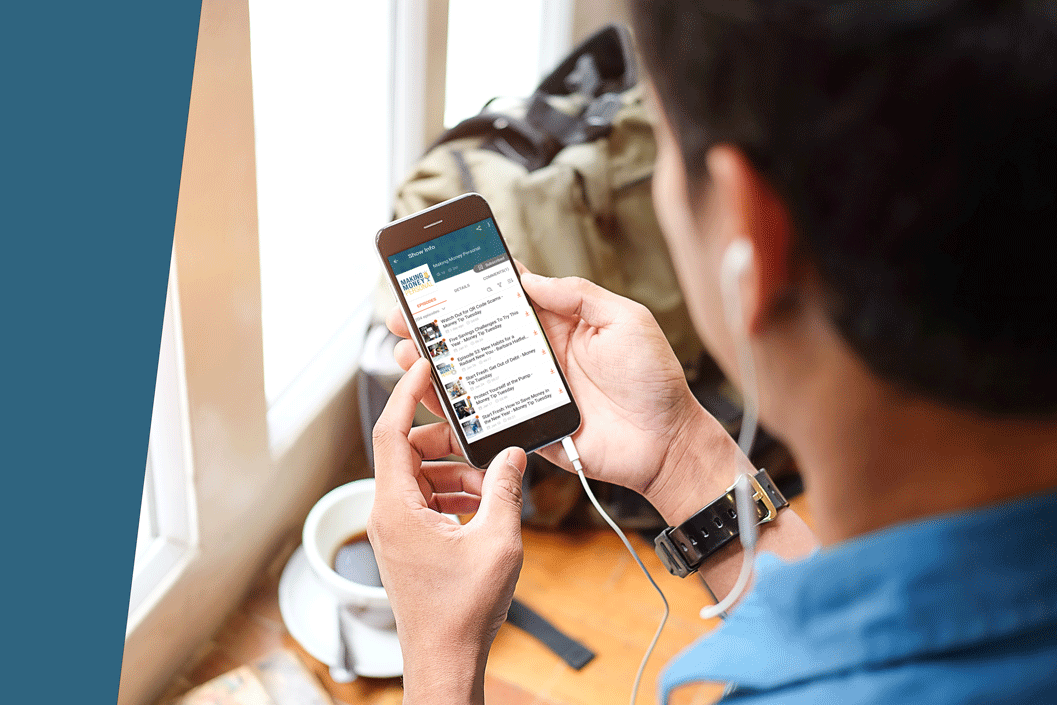
Join us for fun, relevant financial topics that provide you with resources to help you make financial decisions. The Making Money Personal Podcast talks about the impact that money has on your personal and professional life. Our podcast examines trends and topics with support from industry professionals.