Making Money Personal
Engaging in real talk about financial matters that affect your life and your community.






Episodes

41 minutes ago
41 minutes ago
7 min
If the holiday season seems to arrive earlier every year, you're not imagining it.
One minute you're enjoying pumpkin spice everything, and the next minute your inbox is full of gift guides, holiday sales, travel deals, and reminders that there are only so many shopping days left until the holidays. But don't panic because there's still time to prep your finances for a stress-free and festive holiday.
Links:
Learn more about our Goal Builder tool to set up and automate savings
Check out TCU University for financial education tips and resources!
Follow us on Facebook, Instagram and Twitter!
Learn more about Triangle Credit Union
Transcript:
Welcome to Money Tip Tuesday from the Making Money Personal podcast.
While the holidays can be filled with fun traditions and memorable moments, they can also bring extra financial pressure. The good news? One of the best gifts you can give yourself this year is a plan.
This tip is all about how a little preparation in the fall can help you enjoy the holiday season without the stress of overspending, last-minute scrambling, or starting the new year with financial regret.
Before we jump into the tips, let's take a quick trip down memory lane.
Maybe you've experienced something like this.
It's December 23rd. You confidently tell yourself, "I've got plenty of time."
A few hours later, you're standing in a crowded store holding three candles, a gift card, a giant tin of caramel popcorn, and something called an "all-purpose wellness blanket" that you're pretty sure nobody actually asked for.
You can't remember who you're shopping for anymore. The parking lot looks like a competitive sport. And somehow you've spent twice your budget trying to finish a list you never made in the first place.
By the time you get home, you've purchased gifts for your kids, your spouse, your neighbor's dog, and possibly a complete stranger because you lost track of what was happening.
Funny? Maybe.
Expensive? Definitely.
That's exactly why a little planning in the fall can make such a big difference. A few small steps now can help you avoid becoming a last-minute holiday shopper armed only with a credit card and panic.
Let's get started.
Tip #1: Create Your Holiday Spending Game Plan
Before you buy a single gift, start with a simple question:
"What do I realistically want to spend this year?"
Many people begin shopping without setting a spending limit, which can make it difficult to keep track of costs as the season progresses.
Take a few minutes to think through all the holiday expenses you typically have. Gifts are usually the first thing that comes to mind, but don't forget:
Holiday meals and entertaining
Decorations
Travel expenses
Charitable giving
School or workplace events
Holiday cards and shipping costs
Once you've listed everything, assign a rough dollar amount to each category.
Having a plan doesn't take the fun out of the holidays. It actually gives you permission to enjoy spending because you've already decided what fits within your budget.
Tip #2: Start a Holiday Fund Now
Even if the holidays are a few months away, there's still time to spread out the cost.
Let's say you expect to spend $600 this holiday season. Setting aside $50 a week over the next couple of months can feel much more manageable than putting the entire amount on a credit card in December.
Think of it as making holiday shopping easier on your future self.
You don't need a special savings account or complicated strategy. Simply creating a dedicated place for holiday money can help prevent those funds from accidentally being spent elsewhere.
Small contributions made consistently can add up surprisingly fast.
Tip #3: Make Your Gift List Early
Here's a challenge: Can you name everyone you're planning to buy gifts for?
If it takes a minute, you're not alone.
Creating your gift list early helps eliminate surprises later. Write down everyone you plan to shop for and estimate a spending limit for each person.
The goal isn't to remove spontaneity. It's to avoid the common holiday experience of realizing you've forgotten someone and making a rushed, expensive purchase at the last minute.
You might also discover opportunities to simplify.
Maybe your family decides on a gift exchange instead of buying for everyone. Maybe you focus on experiences rather than physical gifts.
The earlier you start the conversation, the easier it becomes to make thoughtful decisions that fit your budget.
Tip #4: Take Advantage of Fall Sales Strategically
Fall often brings a variety of sales events, making it a great time to purchase items you've already planned to buy.
Notice the key phrase there: already planned.
A good sale can save money. An unplanned purchase simply because something is discounted can still cost more than you intended to spend.
One strategy is to keep a list on your phone of gifts you're considering. When you spot a genuine deal on something already on your list, you can buy with confidence rather than impulse.
Holiday preparation isn't about buying more. It's about buying smarter.
Tip #5: Check In With Your Budget Before the Holidays Begin
The weeks leading up to the holidays are the perfect time for a financial checkup.
Review your recent spending and savings habits. Ask yourself:
How much flexibility do I have in my budget?
Are there any nonessential expenses I can temporarily reduce?
Have I set aside enough for holiday plans?
Am I comfortable with my spending goals?
This isn't about being restrictive.
It's about making intentional choices so your December spending aligns with your January goals.
No one wants to begin the new year feeling overwhelmed by holiday purchases they barely remember making.
Bonus Holiday Mindset: Focus on Moments, Not Just Money
It's easy to feel pressure to make every holiday bigger, brighter, and more expensive than the last.
But when people look back on their favorite holiday memories, they rarely talk about the price tags.
They remember gathering with family, sharing meals, watching movies together, attending community events, decorating the house, or enjoying traditions that cost little or nothing.
Keeping that perspective can help you make spending decisions that align with what matters most.
After all, the most meaningful parts of the season usually aren't found on a receipt.
The holidays don't have to catch you off guard.
By creating a spending plan, building a holiday fund, making your gift list early, shopping strategically, and checking in on your budget now, you can head into the season feeling prepared instead of pressured.
A little planning this fall can help you enjoy the holidays with less financial stress and more peace of mind.
And if you find yourself holding a mystery wellness blanket in a crowded store on December 23rd, just remember this episode and start planning a little earlier next year.

Oct 20, 2026
Oct 20, 2026
6 min
Credit can influence some of the biggest financial decisions you'll make, from qualifying for a loan to securing a good mortgage rate. As identity theft and financial fraud continue to rise, regularly monitoring your credit is one of the simplest and most effective ways to protect your financial well-being and stay in control of your future.
Links:
Learn more about the credit tracking tool and identity protection benefits with a Better Checking account
Check out TCU University for financial education tips and resources!
Follow us on Facebook, Instagram and Twitter!
Learn more about Triangle Credit Union
Transcript:
Welcome to Money Tip Tuesday from the Making Money Personal podcast.
Have you ever checked your credit score and thought, "Looks fine. I'll check it again someday"? And then forget to look back and check for progress?
For many people, credit is one of those financial topics that only gets attention when it's time to buy a car, apply for a mortgage, or get approved for a credit card.
But here's the thing: your credit report and credit score are working behind the scenes every day, whether you're paying attention to them or not.
Today, we're talking about why monitoring your credit is one of the simplest financial habits you can adopt and how spending just a few minutes each month checking in can potentially save you money, protect you from fraud, and help you reach your financial goals.
Your Credit Affects More Than Just Borrowing
Let's start with the basics.
Many people think credit only matters when you're applying for a loan. But your credit history can influence much more than that.
Lenders use it to evaluate risk. Insurance companies may use it when setting rates in some states. Landlords often review credit reports during the rental application process. And certain employers may review credit information as part of a background check for specific positions.
In other words, your credit reputation can open doors or create obstacles long before you ever apply for a mortgage.
That's why regularly monitoring your credit is less about chasing a number and more about understanding a key part of your financial profile.
Credit Scores Are Showing Signs of Strain
Recent data suggests many Americans are feeling financial pressure.
According to Experian, the average U.S. FICO Score was 713 in 2025, down from 715 the previous year and marking the first annual decline in more than a decade.
Now, a two-point drop might not sound dramatic, but it reminds us that credit scores are not fixed. They change based on our financial behaviors and economic conditions.
Monitoring your credit helps you spot changes early, understand what's affecting your score, and make adjustments before small issues become larger problems.
Credit Monitoring Can Help Detect Identity Theft
Here's perhaps the most compelling reason to stay informed.
Identity theft continues to be a major issue across the United States.
Federal Trade Commission data shows that more than 1.1 million identity theft reports were filed during the first three quarters of 2025, already exceeding the total number reported during all of 2024. Credit card fraud remained the most common form of identity theft, with more than 500,000 reports during that same period.
Imagine discovering a fraudulent account six months after someone opened it in your name.
Now imagine discovering it within a few weeks because you regularly review your credit report.
The sooner you catch suspicious activity, the easier it is to dispute errors and limit potential damage.
Monitoring your credit won't necessarily prevent fraud, but it can help you identify it much sooner.
Mistakes Happen More Often Than You Think
It's easy to assume that credit reports are always accurate.
Unfortunately, that's not always the case.
The Consumer Financial Protection Bureau notes that credit report accuracy remains a significant concern and that errors can meaningfully affect consumers' credit scores.
In a 2024 Consumer Reports and WorkMoney investigation, nearly half of participants found errors on their credit reports, and more than a quarter found serious mistakes that could potentially affect their creditworthiness.
These errors can include accounts that don't belong to you, loans reported incorrectly, duplicate accounts, or payments inaccurately marked as late.
If you're not checking your credit, you may never know those mistakes exist until they affect a loan application or interest rate.
Small Credit Improvements Can Save Big Money
Here's where monitoring becomes especially valuable.
When you track your credit regularly, you begin to understand what influences it.
Maybe your credit card balances are creeping up. Maybe you forgot about an old account. Maybe paying down a balance boosts your score faster than expected.
Those insights can help you make smarter decisions.
And even modest credit score improvements can potentially translate into lower borrowing costs over time.
Think about it this way: a better credit profile could help you qualify for more favorable rates on a future auto loan, personal loan, or mortgage. That's money that stays in your pocket instead of going toward interest.
That's a pretty good return on a habit that only takes a few minutes each month.
How to Get Started
The good news is that monitoring your credit doesn't need to be complicated.
Start with these three simple steps:
Make it a habit to review your credit report.
Check your credit score and note any significant changes.
Investigate unfamiliar accounts, inquiries, or suspicious activity immediately.
Treat it like any other wellness checkup. You don't wait until you're sick to pay attention to your health, and you shouldn't wait until you're denied credit to pay attention to your financial reputation.
Your credit is one of the most important financial tools you have.
By monitoring it regularly, you can catch errors, detect fraud, track your progress, and position yourself for future financial opportunities.
The best part? You don't need to be a financial expert to do it.
A few minutes of attention today can help prevent major headaches tomorrow.
If you have a Triangle Better Checking account, you can view your credit score, get a copy of your credit report every 90 days, and use the helpful credit score tracker within the Better Checking app. For more information about these and other benefits, visit trianglecu.org or follow the link in the show notes.

Oct 13, 2026
Oct 13, 2026
7 min
In today’s connected world, cybercriminals are constantly finding new ways to exploit everyday habits, making cybersecurity a shared responsibility for everyone. From suspicious emails to weak passwords, small choices can have big consequences. The good news? A few simple habits can go a long way toward protecting your personal information, finances, and peace of mind.
Links:
Cybercrime resources and reports:
CISA (the Cybersecurity & Infrastructure Security Agency)
FBI’s Internet Crime Complaint Center
Verizon’s 2026 Data Breach Investigations Report
Learn more about the identity protection benefits with a Better Checking account
Check out TCU University for financial education tips and resources!
Follow us on Facebook, Instagram and Twitter!
Learn more about Triangle Credit Union
Transcript:
Welcome to Money Tip Tuesday from the Making Money Personal podcast.
Cybersecurity used to feel like something handled by the IT department. Not anymore! Today, a scam can show up as a text from your bank, a phone call from someone who sounds exactly like a family member, or an email that looks like it came from your employer. Artificial Intelligence (AI) is making those scams faster and more convincing, and criminals don’t need to be technology experts to take advantage of it.
The numbers tell the story. The FBI received more than 1 million internet crime complaints in 2025, with losses exceeding $20 billion. That was a 26% increase in reported losses from 2024.
So, what can you actually do about it? Start with these five habits.
Turn on multifactor authentication
A password isn’t always enough. Multifactor authentication, or MFA, adds another layer of security by requiring a code, authentication app, fingerprint, or other verification before allowing access.
The 2026 Verizon Data Breach Investigations Report found that credential abuse accounted for 13% of breaches, while exploitation of software vulnerabilities had become the leading way attackers gained access.
Do this: Turn on MFA for your email, financial, banking, shopping, and social media accounts. Start with the accounts that would cause the most trouble if someone else gained access to them.
Slow down when something feels urgent
A sense of urgency is one of a scammer’s favorite tools. “Your account will be closed.” “You have an unpaid bill.” “I need you to send money right now.”
AI is making these messages harder to spot. The FBI’s 2025 Internet Crime Report documented 22,364 complaints involving AI-related information and more than $893 billion in reported losses. The FBI also reported that businesses lost more than $30 million to AI-related business email compromise scams.
Do This: Don’t click, reply, or send money simply because a message looks legitimate. Verify it independently. If someone asks for money or sensitive information, contact them using a phone number or website that you already know is legitimate.
And remember: a familiar voice isn’t proof of identity. Voice cloning can make a scammer sound like someone you know.
Give your passwords a fresh start
Using the same password everywhere is convenient, but it can also give criminals a shortcut into multiple accounts.
Use a different, strong password for each important account. Strong passwords often include uppercase and lowercase letters, numbers, and symbols and are not easily guessed. Avoid repeating letters or sequential characters like “abc” or “123” when creating a strong password.
Do this: If you haven’t changed or reused a password in a while, start with your email and financial accounts. Never share passwords or give your password to someone who contacts you unexpectedly.
Be thoughtful about what you put into AI tools
AI can help us write, research, summarize, and solve problems. But convenience can come with a privacy cost.
The 2026 DBIR found that 45% of employees were regular users of AI on corporate devices, up 15% from the previous year. The report also found that unauthorized “shadow AI” use had become a growing data-loss concern, with sensitive information (including source code and other structured data) being entered into unapproved AI services.
Do this: Before putting information into an AI tool, stop and consider whether it contains anything private, confidential, or sensitive. If it does, don’t upload it unless you know the tool is approved for that type of information.
Update your devices, and don’t ignore the warning signs
Those software update reminders may be annoying, but they’re important.
According to the 2026 DBIR, 31% of breaches began with exploitation of vulnerabilities, making it the leading initial access method. Even more concerning, organizations fully remediated only 26% of critical vulnerabilities tracked by CISA in 2025.
Do this: Install updates promptly and replace devices that no longer receive security updates. If you notice an unfamiliar transaction, compromised account, or suspicious activity, act quickly. Contact your financial institution, change affected passwords, and report suspected fraud.
Cybersecurity Quick Check
Take five minutes to ask yourself:
Do I use MFA on my most important accounts?
Do I use unique passwords?
Did I verify that unexpected messages are legitimate before clicking?
Have I limited the personal or confidential information that I share with AI tools?
Are my phone, computer, and apps up to date?
If you answered “Yes” for all five, you’re off to a good start! If you don’t, October is a good time to make a few changes.
Helpful Resources
For practical guidance, visit CISA (the Cybersecurity & Infrastructure Security Agency), the FBI’s Internet Crime Complaint Center, and Verizon’s 2026 Data Breach Investigations Report. We’ll share the link to these resources in the show notes.
Cybersecurity isn’t about being perfect. It’s about making it harder for someone else to get through the door and knowing what to do if they try.
And remember, even when you follow all these steps to help protect yourself against cybersecurity threats, you are not immune to identity fraud. If you feel your personal information has fallen into the hands of a thief, contact us. Quickly recognizing and addressing the issue will minimize damage to your accounts and your identity. If you’re a Better Checking account holder, you have access to a team of Identity Theft Recovery Advocates who can answer your questions, address your concerns, and help you get back on track as quickly as possible. These advocates work on your behalf to help you recover and reverse any damage caused by identity theft. Contact us or find out more about identity theft resolution services and other benefits of Better Checking by visiting trianglecu.org.

Oct 6, 2026
Oct 6, 2026
6 min
As the seasons change, many of us are adjusting our routines. We're getting back into a rhythm after summer, looking ahead to holiday shopping, and trying to make the most of what's left of the year.
When it comes to our finances, it’s important to approach the end of the year with confidence rather than chaos and the best way to do that is to stop, breathe and set aside time for a little financial self-care.
Links:
Start your first budget! Watch our Budgeting 101 webinar
Explore Goal Builder
Check out TCU University for financial education tips and resources!
Follow us on Facebook, Instagram and Twitter!
Learn more about Triangle Credit Union
Transcript:
Welcome to Money Tip Tuesday from the Making Money Personal podcast.
Just like physical or mental self-care, your finances can benefit from a seasonal check-in, too. The good news? Financial self-care doesn't have to mean making huge sacrifices or overhauling your budget. Small, intentional habits can go a long way toward helping you feel more prepared, less stressed, and more confident about your money.
Here are six financial self-care habits you can start practicing right now.
Habit #1: Give Your Budget a Seasonal Refresh
Life changes throughout the year, and your budget should change with it.
Maybe your utility bills are increasing as temperatures cool down. Maybe school expenses, sports fees, or upcoming holiday plans are affecting your spending. Take a few minutes to review where your money is currently going and update your budget to reflect your reality today, not six months ago.
Think of it like switching out your wardrobe for a new season. Your financial plan deserves the same attention.
If you're new to budgeting, or need to restart an old budget, watch out Budgeting 101 webinar for a detailed overview of a working budget and downloadable resources to get started. Link in the show notes.
Habit #2: Rebuild or Add to Your Emergency Fund
If you've dipped into savings recently, now is a great time to replenish your emergency fund.
Unexpected expenses have a way of showing up when we least expect them, whether it's a car repair, medical bill, or home maintenance issue. Even setting aside a small amount each week can help rebuild that financial cushion over time.
Remember, financial self-care isn't about saving huge amounts overnight. It's about creating a habit that helps you feel prepared for whatever comes your way.
Haven’t set up an emergency fund yet? Get started with our Goal Builder tool within online and mobile banking. It makes it easy for you to select an account, set a savings goal, and schedule recurring designations for an automated savings strategy.
Habit #3: Review Your Recurring Expenses
Subscriptions and automatic payments can quietly accumulate over time.
Take a few minutes to scan your bank or credit card statements and identify recurring charges. Are you still using every streaming service, app, membership, or subscription you're paying for?
Canceling even one or two services you no longer use could free up money that can be redirected toward savings, debt repayment, or other priorities.
Sometimes improving your financial health isn't about earning more. It's about making sure your money is supporting what matters most to you.
Habit #4: Start Planning for Holiday Spending Early
The holiday season has a way of arriving faster than we expect.
Instead of waiting until November or December, start making a spending plan now. Think about gifts, travel, entertaining, charitable giving, and any seasonal activities you typically enjoy.
Putting aside a little money each week can make those expenses feel much more manageable and help you avoid relying on credit cards or carrying balances into the new year. This is another great use for Goal Builder mentioned earlier. Create a new goal for holiday spending and make this the year you shop with more confidence and control.
Remember, a little planning today can reduce a lot of financial stress later.
Habit #5: Check In on Your Financial Goals
This is the perfect time to pause and ask yourself: What goals did I set at the beginning of the year, and how am I doing?
Maybe you wanted to save more, pay down debt, improve your credit score, or build an emergency fund. Celebrate progress, even if it's smaller than expected.
Financial wellness isn't about perfection. It's about consistently moving in the right direction.
And if your goals no longer fit your circumstances, that's okay, too. Adjusting a goal isn't giving up. It's making sure your plan reflects your current priorities and needs.
Habit #6: Practice Financial Gratitude
Financial self-care isn't only about numbers.
Take a moment to recognize what's going well financially, whether it's paying bills on time, sticking to a savings habit, reducing debt, or simply making more intentional spending decisions.
Acknowledging progress can help build confidence and reduce the tendency to focus only on what's left to accomplish.
Just like other forms of self-care, financial wellness is a journey. Recognizing small wins along the way can help keep you motivated for the long term.
As you move through this season, remember that financial self-care doesn't require dramatic changes. Small actions, practiced consistently, can have a meaningful impact over time.
Refreshing your budget, building savings, reviewing recurring expenses, planning ahead for holiday spending, checking in on your goals, and appreciating your progress are all simple ways to strengthen your financial well-being.
Choose one habit to focus on this week and start there. Your future self will thank you.

Sep 29, 2026
Sep 29, 2026
6 min
Have you ever checked your account balance and realized one unexpected expense could throw everything off track? Today, we're talking about the power of a cash cushion and how having a little extra money set aside can help you handle life's surprises with a lot less stress.
Links:
Check out TCU University for financial education tips and resources!
Follow us on Facebook, Instagram and Twitter!
Learn more about Triangle Credit Union
Transcript:
Welcome to Money Tip Tuesday from the Making Money Personal podcast.
Have you ever checked your checking account balance and thought, “I know I have money… but how much of it can I actually spend?”
That’s where a cash cushion comes in.
A cash cushion is money you intentionally keep available to cover the unexpected — a larger-than-normal utility bill, a car repair, a medical expense, or simply a week when more bills hit your account than usual.
It’s not necessarily your emergency fund. It’s more like the financial buffer between your everyday spending and your larger savings goals.
Today, we’re talking about the ins and outs of a cash cushion, how much you might want to keep, and an important question: Should that money stay in your checking account, or should you keep it in a liquid savings account and move it over when you need it?
WHAT IS A CASH CUSHION?
Let’s start with what a cash cushion actually does.
Think of your checking account as the place where your money comes and goes. Your paycheck comes in, bills go out, groceries are purchased, and everyday expenses are paid.
But if you keep your checking balance too close to zero, even a small surprise can throw things off.
A cash cushion gives you some breathing room.
For example, suppose you normally have $1,500 left in your checking account after your regular bills are paid. Instead of thinking, “I have $1,500 available to spend,” you might decide that $500 of that is your cash cushion.
That means your true spending balance is $1,000.
The $500 isn't money you plan to spend. It's there to absorb the unexpected.
And that distinction is important because a cash cushion is really about peace of mind and cash-flow management, not just having extra money sitting around.
HOW MUCH SHOULD YOU KEEP?
So, how much should your cash cushion be?
There isn't one magic number.
A good starting point is to look at your typical monthly expenses and how predictable your income is.
If you have a steady paycheck and relatively predictable expenses, you might be comfortable with a smaller cushion — perhaps a few hundred dollars or enough to cover one or two unexpected expenses.
If your income fluctuates, you're self-employed, or your expenses vary significantly from month to month, you may want a larger cushion.
And remember: your cash cushion is different from your emergency fund.
An emergency fund is designed for bigger, less frequent financial emergencies — things like a major car repair, an extended period without income, or a significant unexpected expense.
Your cash cushion is more about the little financial surprises and timing issues that happen in everyday life.
CHECKING OR SAVINGS?
Now we get to the big question.
Should your cash cushion actually sit in your checking account?
There are advantages to doing that.
First, it's extremely convenient. The money is already there, so you don't have to transfer anything when an unexpected expense pops up.
It can also help prevent overdrafts and give you a little breathing room between paychecks.
But there's one big downside:
Money that's sitting in your checking account can look like money that's available to spend.
You might tell yourself, “I have $2,000 in checking,” when really $500 of that is supposed to be your cushion.
And if you spend the cushion, you've defeated the purpose.
That's why another strategy is to keep your cash cushion in a liquid savings account — somewhere you can access the money quickly, but where it's separate from your everyday spending.
For example, you might decide that you want a $500 cushion.
Instead of keeping $500 extra in checking, you could keep your checking account at the amount you need for normal expenses and hold that $500 in savings.
When an unexpected expense comes up, you simply transfer the money from savings into checking.
This approach creates a little psychological separation between money I can spend and money I have available if I need it.
WHICH STRATEGY IS BETTER?
So which option is better?
Honestly, it depends on how you manage money.
If you tend to spend whatever is sitting in your checking account, keeping your cushion in savings may be the better strategy.
It creates a boundary.
If you have excellent discipline and prefer the convenience of having everything immediately available, keeping a cushion in checking may work just fine.
You can even take a hybrid approach.
Maybe you keep $200 in checking as an immediate buffer and another $500 in liquid savings.
That way, you have a little flexibility without keeping a large amount of extra cash in your everyday account.
The key is to give every dollar a job.
If $500 is your cushion, mentally—and ideally physically—designate it as your cushion.
Don't count it as spending money.
THE CASH CUSHION RULE
Here's a simple rule to remember:
Your checking account should help you manage today. Your savings account can help protect tomorrow.
Your cash cushion sits somewhere in between.
It's there to make today's financial surprises less stressful without forcing you to dip into your larger emergency savings.
And if you do use your cushion, make replenishing it a priority.
For example, if your $500 cushion gets used for an unexpected car repair, don't think of that as money that's simply gone.
Think of it as a signal: now I need to rebuild that $500 before the next surprise happens.
That's how a cash cushion becomes a habit rather than just a balance in your account.
At the end of the day, a cash cushion isn't about having a huge amount of money sitting around.
It's about creating margin in your finances.
Whether you keep it in checking or in a liquid savings account, the goal is the same: to give yourself room when life doesn't go exactly according to plan.
So take a look at your checking account today and ask yourself:
“How much of this money is actually available for me to spend — and how much should be left untouched as my cushion?”
Once you know that number, you're one step closer to making your money work with you instead of constantly worrying about whether you have enough.
Thanks for listening, and remember: a little financial breathing room can make a big difference.

Sep 22, 2026
Sep 22, 2026
7 min
In today’s financial climate, finding ways to cut spending and maximize savings is likely to be on everybody’s priority list. If you’re on the hunt for a way to get more for your money, look no further than your local credit union for a simple and safe way to grow your savings with certificates.
Links:
Learn more and explore certificates
Check out TCU University for financial education tips and resources!
Follow us on Facebook, Instagram and Twitter!
Learn more about Triangle Credit Union
Transcript:
Welcome to Money Tip Tuesday from the Making Money Personal podcast.
If you've been keeping your money in a regular savings account and wondering whether there's a way to earn more without taking on investment risk, a certificate may be worth considering.
Today, we'll cover how certificates work, why they can be a powerful savings tool, and what you should look for when comparing high-yield certificate options.
What Exactly Is a Certificate?
Let's start with the basics.
A certificate, also known by many as a CD or Certificate of Deposit at other financial institutions, is a savings product that allows you to deposit money for a fixed period of time, known as the term, in exchange for a fixed dividend or interest rate.
In simple terms, you're agreeing not to touch that money for a specific timeframe, such as 6 months, 12 months, 24 months, or longer. In return, the financial institution rewards you with a higher rate than you would typically earn in a standard savings account.
Think of it as getting paid a premium for your patience.
Unlike stock market investments, certificates aren't subject to market fluctuations. You know exactly how much you'll earn when the certificate matures, which can provide peace of mind and predictability.
Why Are Certificates Attractive Right Now?
One of the biggest benefits of certificates is their ability to lock in a guaranteed return.
When certificate rates are elevated, savers have an opportunity to secure that rate for months or even years.
Let's say you have money set aside for a future goal, perhaps a home down payment, a new vehicle, a wedding, or a general savings fund you don't expect to need immediately.
A certificate can help that money work harder while still preserving your principal.
That's a key distinction.
Unlike investing, certificates focus on capital preservation and predictable growth.
For many people, that's exactly what they want for short-term and medium-term savings goals.
Who Should Consider a Certificate?
Certificates can be especially valuable for people who:
Have cash sitting in a low-yield savings account.
Are saving for a known goal within the next one to five years.
Want guaranteed growth without market risk.
Prefer a "set it and forget it" approach to saving.
Are looking to diversify between savings and investment accounts.
Certificates can also help remove temptation.
Because the funds are committed for a defined term, you're less likely to dip into your savings for impulse purchases or non-essential expenses.
What Should You Look for When Comparing Certificates?
Not all certificates are created equal.
If you're shopping around, here are five things to pay attention to.
1. The Yield
Most people focus immediately on the advertised rate, and that's important. Higher yields generally mean your money will grow faster.
However, don't stop there. Make sure you're comparing similar terms. A 12-month certificate should be compared against other 12-month certificates, not a 36-month product.
It's also important to understand whether the quoted return is the annual percentage yield, or APY, since APY reflects the impact of compounding. The rate advertised may not necessarily be the annual percentage yield, so make sure you look closer to detect the difference.
2. The Length of the Term
Ask yourself:
"When will I need this money?" If you're saving for a vacation next summer, a five-year certificate probably isn't the best fit. The term should align with your financial goal and your expected timeline. The goal is to earn more while still maintaining access when you need it.
3. Early Withdrawal Penalties
A certificate is designed to be held until maturity. If you withdraw funds early, you'll typically face a penalty that reduces some of the earnings.
Before opening a certificate, understand:
How the penalty is calculated
Whether any exceptions exist
How much flexibility you'll have if circumstances change
A certificate should complement your emergency fund, not replace it.
4. Minimum Deposit Requirements
Some certificates require a large initial deposit, while others can be opened with relatively modest amounts. Don't assume you need thousands of dollars to get started. Many financial institutions offer options that are accessible to a wide range of savers.
5. Your Overall Savings Strategy
One mistake some savers make is putting all their available cash into a single certificate. Instead, think about how it will fit into your broader financial picture. It’s not typically worth it to put all savings funds into a certificate account.
Your savings strategy should include at least:
An emergency fund that's easily accessible
A checking account for everyday expenses
A regular savings account for short-term needs
That leaves things like certificates for more medium to longer-term savings goals.
Here's a bonus tip.
Many savvy savers use what's called a "certificate ladder." Instead of putting all your money into one certificate, you divide it among several certificates with different maturity dates.
For example:
One 12-month certificate
One 24-month certificate
One 36-month certificate
As each certificate matures, you can reinvest or use the funds based on your current needs. This strategy can provide a balance between earning competitive yields and maintaining flexibility.
Certificates may not be flashy, but they remain one of the most effective tools for growing savings safely and predictably.
If you're looking for guaranteed growth, want to protect your principal, and have specific savings goals on the horizon, a certificate could be an excellent addition to your financial toolkit.
Before opening one, make sure to consider the yield, term length, early withdrawal penalties, minimum deposit requirements, and how the certificate fits into your overall savings plan.
If you'd like to learn more about certificate options and how they can support your savings goals, you’re welcome to visit our website or contact us at Triangle Credit Union to determine which certificates might be right for your financial plan.
Until next time, keep saving smart and making your money work harder for you.

Sep 15, 2026
Sep 15, 2026
5 min
If you're in the market for a car, one of the first questions you'll face is whether to buy new or used. While most people focus on the sticker price, the financing side of the equation can have just as much impact on your monthly payment and overall cost.
Links:
Looking for financing options? Check out our competitive auto rates
Check out TCU University for financial education tips and resources!
Follow us on Facebook, Instagram and Twitter!
Learn more about Triangle Credit Union
Transcript:
Welcome to Money Tip Tuesday from the Making Money Personal podcast.
In this tip, we're talking about one of the biggest financial decisions many of us make outside of buying a home: purchasing a vehicle. We’re going to break down the pros and cons of financing a new versus used vehicle and share some helpful statistics that could save you money.
Let's start with new vehicles.
The biggest advantage of buying new is predictability. New cars typically come with manufacturer warranties, the latest safety technology, and little to no maintenance concerns for the first several years.
When it comes to financing, new vehicles often qualify for lower interest rates than used vehicles because lenders view them as less risky. The Federal Reserve's auto loan data continues to show that financing costs for new vehicles generally run lower than rates offered on used vehicles.
But there is a tradeoff.
Vehicle prices remain historically high. Industry data shows the average new vehicle transaction price is around $49,000, while the average used vehicle sells for roughly $26,000. That's a difference of more than $20,000.
And then there's depreciation.
A new vehicle begins losing value the moment you drive it off the lot. While depreciation varies by make and model, it's often the largest hidden cost of buying new.
Now let's talk about used vehicles.
The biggest benefit is affordability.
A lower purchase price usually means a smaller loan amount, a lower monthly payment, and potentially less money spent over the life of the loan.
You'll also avoid the steepest depreciation that typically occurs during a vehicle's first few years.
However, used vehicles can come with higher financing rates and potentially more maintenance expenses as the vehicle ages.
There's another factor worth mentioning. Cox Automotive, the largest automotive technology and services provider, reports that it expects used vehicle prices to remain relatively stable, and wholesale used vehicle values have even shown modest increases due to strong consumer demand and limited supply.
That means finding a great deal on a quality used vehicle may require a little extra research and patience.
Whether you're shopping for new or used, here are three questions to ask yourself:
First: How long do I plan to keep this vehicle?
If you tend to drive your cars for 10 years or longer, paying more upfront for a new vehicle may make sense because you'll spread that cost over many years of ownership.
Second: What's more important: payment or total cost?
A lower payment can be attractive, but extending your loan term can significantly increase the total amount paid in interest.
Third: How much vehicle can I comfortably afford?
Financial experts often recommend keeping total transportation costs, including the loan payment, insurance, fuel, and maintenance, within a reasonable percentage of your monthly income. Wallet Hub reports a percentage of around 10%-15% towards transportation as ideal for a healthy budget.
Remember, just because you qualify for a certain loan amount doesn't necessarily mean that's what fits comfortably into your budget.
Financing Tips for Any Vehicle Purchase
Before you head to the dealership, consider these money-saving tips:
Check your credit score before applying.
Get pre-approved for financing so you understand your budget.
Compare loan offers from multiple lenders.
Focus on the total loan cost, not just the monthly payment.
Consider refinancing later if your credit improves or rates decrease.
Even a small difference in your interest rate can save hundreds or even thousands of dollars over the life of your loan.
At the end of the day, there isn't a one-size-fits-all answer.
A new vehicle may offer lower financing rates, warranty protection, and the latest features. A used vehicle may provide substantial savings and a lower overall investment.
The key is understanding the full financial picture, including the purchase price, financing costs, depreciation, and long-term ownership expenses.
Remember, Triangle’s team is always available and willing to help you find the right financing option for your next car purchase. You’re welcome to visit any local branch or contact us online or over the phone.

Sep 8, 2026
Sep 8, 2026
4 min
What does your credit score really say about you? And more importantly, how can a few smart moves help you improve it? If you’re unhappy about your current score and looking for some ways to boost it a bit, or even a lot, keep listening because in this tip, we’re sharing some key things you can do to get that score you’ve always wanted.
Links:
Get a free report at annualcreditreport.com
Learn more about how to access your Better Checking account
Check out TCU University for financial education tips and resources!
Follow us on Facebook, Instagram and Twitter!
Learn more about Triangle Credit Union
Transcript:
Welcome to Money Tip Tuesday from the Making Money Personal podcast. With interest rates still higher than many people have become used to over the last decade, your credit score can have a bigger impact on your wallet than ever before. Whether you're applying for a credit card, financing a vehicle, buying a home, or looking for a home equity loan, your credit score plays a major role in the rates and terms you receive. The good news? Even small improvements to your score can make a difference. Most credit scores range from 300 to 850. Generally speaking, a score of 670 or higher is considered good, 740 and above is very good, and 800-plus is excellent. So, if your score could use a little help, here are five practical ways to start moving it in the right direction. Tip number one: Give your credit a breather. Every time you apply for new credit, a hard inquiry may appear on your report. One application won't do much damage, but several in a short period can. If you're not actively shopping for a loan, consider pressing pause on new credit applications. Tip number two: Make every payment on time. This remains the single most important factor affecting most credit scores. If remembering due dates is a challenge, set up automatic payments or reminders. Even one missed payment can have a lasting impact. Tip number three: Lower your credit utilization. In simple terms, that's how much of your available credit you're using. If your cards are close to their limits, try paying down balances. Many financial experts recommend keeping utilization below 30%, and even lower is better. Tip number four: Build credit strategically. If you're new to credit or rebuilding after a setback, a secured credit card or credit-builder loan may help. These tools can demonstrate responsible borrowing habits and gradually strengthen your credit profile. Tip number five: Think carefully before closing old accounts. It may seem like closing unused cards is always a good idea, but older accounts can help establish a longer credit history. If a card has no annual fee and isn't causing problems, keeping it open may actually benefit your score. One more quick reminder: Regularly review your credit report for errors. Incorrect information happens more often than people realize, and identifying an issue early can save time and frustration. Check out annualcreditreport.com for a free credit report or if you have a Better Checking account you have automatic access to a free credit report every 90 days. Just log into your Better checking app to take a look. Building a stronger credit score doesn't happen overnight, but consistent habits can lead to meaningful results. Focus on paying on time, managing balances wisely, and being intentional about new credit.
If there are any other tips or topics you'd like us to cover, let us know at tcupodcast@trianglecu.org. Also, remember to like and follow our Making Money Personal Facebook and Instagram to share your thoughts. Finally, remember to look for our sponsor, Triangle Credit Union, on Facebook and LinkedIn.
Thanks for listening to today's Money Tip Tuesday. Check out our other tips and episodes on the Making Money Personal podcast.

Sep 1, 2026
Sep 1, 2026
5 min
Struggling trying to find a little freedom in your budget because it's feeling way too tight, you just can't seem to get ahead? Don't fret because there's a factor that can help you get ahead if you can detect and leverage it. It's called margin and it's the key to advancing in a positive financial direction rather than falling farther behind.
Links:
Check out TCU University for financial education tips and resources!
Follow us on Facebook, Instagram and Twitter!
Learn more about Triangle Credit Union
Transcript:
Welcome to Money Tip Tuesday from the Making Money Personal podcast.
Have you ever looked at your budget and thought, “Where does all my money go?” You’re paying the bills, covering everyday expenses, making your minimum debt payments—and somehow, there never seems to be anything left over.
Today, we’re talking about a simple but powerful concept that can change the way you manage your money: margin.
So, what exactly is margin?
Margin is the money you have left after your income covers your essential expenses and regular financial commitments. Think of it as breathing room in your budget.
For example, if you bring home $4,000 a month and your necessary expenses total $3,600, you have $400 of margin.
That $400 is important because it gives you options.
Without margin, an unexpected expense—a car repair, medical bill, or higher-than-usual utility bill—can quickly lead to using a credit card or taking on additional debt.
But when you have margin, you have money available to handle those surprises without immediately reaching for credit.
And here's where margin becomes especially powerful: it can help you pay down debt faster.
Let's say you have $400 left over each month after your regular expenses. You could use that money to make an additional payment toward a credit card, personal loan, or other debt.
Even an extra $100 or $200 a month can make a meaningful difference over time.
But here's the important part: don't think of margin as money that you have to spend. Think of it as money you get to direct intentionally.
Maybe your first goal is building a small emergency savings cushion. Once you have that foundation, you can direct more of your monthly margin toward your highest-interest debt.
For example, imagine you have a credit card balance of $5,000 with a high interest rate. Your minimum payment may keep the account current, but it may take years to pay off the balance.
Adding an extra $200 to each payment every month can significantly accelerate your progress and reduce the amount of interest you pay over the life of the debt.
So, how do you create margin if your budget currently feels tight?
Start small.
Take a close look at your monthly spending and separate your expenses into three categories: needs, commitments, and wants.
Your needs might include housing, utilities, groceries, transportation, and insurance.
Your commitments could include debt payments, subscriptions, or other recurring expenses.
And then there are the wants—the purchases that aren't necessarily essential but that can add up over time.
Look for just a few areas where you can make small adjustments.
Maybe it's eating out one less time each week. Maybe you cancel a subscription you aren't using. Maybe you set a weekly spending limit for discretionary purchases.
You don't have to completely eliminate the things you enjoy. The goal is to create intentional spending so that some of your income has a purpose before you spend it.
And remember: margin isn't about being restrictive. It's about creating freedom.
When you have margin, you're less likely to live paycheck to paycheck. You have more flexibility when something unexpected happens. And you have an opportunity to make progress toward bigger financial goals.
So, if you're trying to pay down debt, don't just ask yourself, “How can I make a bigger debt payment?”
Ask yourself, “How can I create more margin in my monthly budget?”
Then give that margin a job.
Build your emergency savings. Pay down high-interest debt. Work toward a financial goal. Or eventually, give yourself room to save for something you've been putting off.
The goal isn't a perfect budget.
The goal is a budget that gives you breathing room, choices, and a path forward.
Because when you create margin, you're not just finding extra money.
You're creating financial flexibility—and putting yourself in a stronger position to take control of your debt and your financial future.
Thanks for listening, and remember: small changes can create meaningful progress when you make them consistently.

Aug 25, 2026
Aug 25, 2026
5 min
It’s a moment none of us wants to experience. The moment we learn someone stole our identity. Our head swims with questions. How did this happen? Where did I go wrong? How do I go about fixing it? There are many ways thieves target us and steal our information. From data breaches to check fraud, the tactics vary, but what matters most in this time is knowing the right steps to take to resolve the issue as soon as possible.
Links:
View and download the helpful Action Guide for step-by-step help with recovering from check fraud
Learn more about the America Saves Pledge
Check out TCU University for financial education tips and resources!
Follow us on Facebook, Instagram and Twitter!
Learn more about Triangle Credit Union
Transcript:
Welcome to Money Tip Tuesday from the Making Money Personal podcast.
This week’s tip is a resource from the America Saves campaign focused on check fraud awareness and resolution. Take a moment, listen in, and share it with others so they can be made aware of this ongoing financial threat.
Finding out you’ve been a victim of check fraud can feel overwhelming.
Maybe a check was stolen from the mail. Maybe your account shows a payment you never authorized. Or maybe you deposited a check that turned out to be fake.
No matter how it happened, one thing is true: acting quickly matters. The sooner you respond, the better your chance of limiting financial loss, protecting your account, and preventing further fraud.
If you think you’re a victim of check fraud, here are the steps to take.
Step 1: Contact Your Financial Institution Immediately
Your first call should be to your financial institution. Tell them:
What happened
Which transaction looks suspicious
When you noticed it
Your financial institution may be able to:
Place a stop payment
Freeze your account
Open an investigation
Provide information needed to file a report with the authorities
Do not wait to “see if it clears up.” Time matters.
Step 2: Review Your Account for Other Fraud
Fraud may not stop at one transaction. Look through recent account activity for:
Other unfamiliar checks
Unusual withdrawals
New account changes you did not make
Review at least the last 30–60 days if possible. If your account information was stolen, criminals may attempt additional fraud.
Step 3: Document Everything
Keep records of:
Suspicious transactions
Check numbers
All related communications including calls, emails or text messages related to the fraud
Police or fraud reports
Write down dates, names, and case numbers. This documentation can help if you need to dispute charges or file reports.
Step 4: File a Fraud Report
Depending on the situation, you may need to report the fraud to local authorities or other agencies. This can be especially important if:
Mail was stolen
Identity theft is involved
A scammer targeted you online
Ask your financial institution what reports they recommend. Keep copies of everything.
Step 5: Secure Your Account
If your account information has been compromised, your institution may recommend that you open a new account.
Take additional steps like:
Changing online banking passwords
Updating PINs
Reviewing linked payment accounts
If you use the same password elsewhere, update those too.
Step 6: Replace Compromised Checks
If physical checks were stolen:
Report the missing check numbers
Store remaining checks securely
Order new checks if needed
Do not continue using compromised check numbers.
Step 7: Watch for Identity Theft
A stolen check contains personal information. Watch for:
Unfamiliar credit activity
Unexpected bills
Collection notices
New account openings
Continue monitoring your financial accounts regularly.
If You Deposited a Fake Check
If you deposited a fraudulent check as part of a scam, contact your financial institution immediately. Explain what happened. Even if the money appeared in your account, it may later be removed if the check is fake.
Remember: If someone asks you to send money back after depositing a check, that is a major warning sign.
How to Protect Yourself Going Forward
After fraud happens, it’s normal to feel cautious.
Moving forward:
Monitor your account weekly
Use account alerts
Mail checks securely
Keep checks stored safely
Be cautious with unexpected payments
Ask questions before acting
Fraud can happen to anyone. What matters most is how quickly you respond and what you do next.
Final Takeaway
Check fraud can be frustrating and stressful, but you are not powerless. Quick action can help protect your money and reduce the impact. Knowledge is one of your strongest tools. Download this action guide for step-by-step help on what to do, who to contact, and how to protect your money moving forward.
Want to continue building your financial confidence and awareness? Take the America Saves Pledge today! We’ll send you tips, tools, and resources to help you save for what matters most to you.
Financial Lessons & Tips
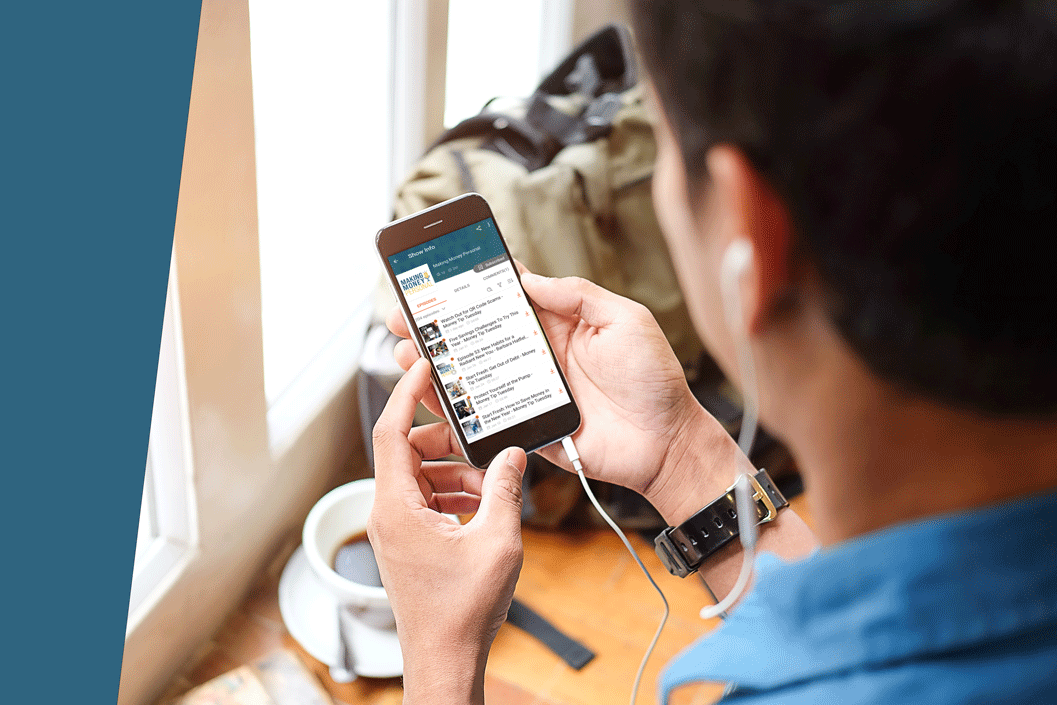
Join us for fun, relevant financial topics that provide you with resources to help you make financial decisions. The Making Money Personal Podcast talks about the impact that money has on your personal and professional life. Our podcast examines trends and topics with support from industry professionals.